Reposted from the Algorithmic Pattern forum.
I’m drawn back to Sanquhar knitting again!
- A guide to the patterns
- Videos from May MacCormick on knitting - knitting class introduction, part one, part two
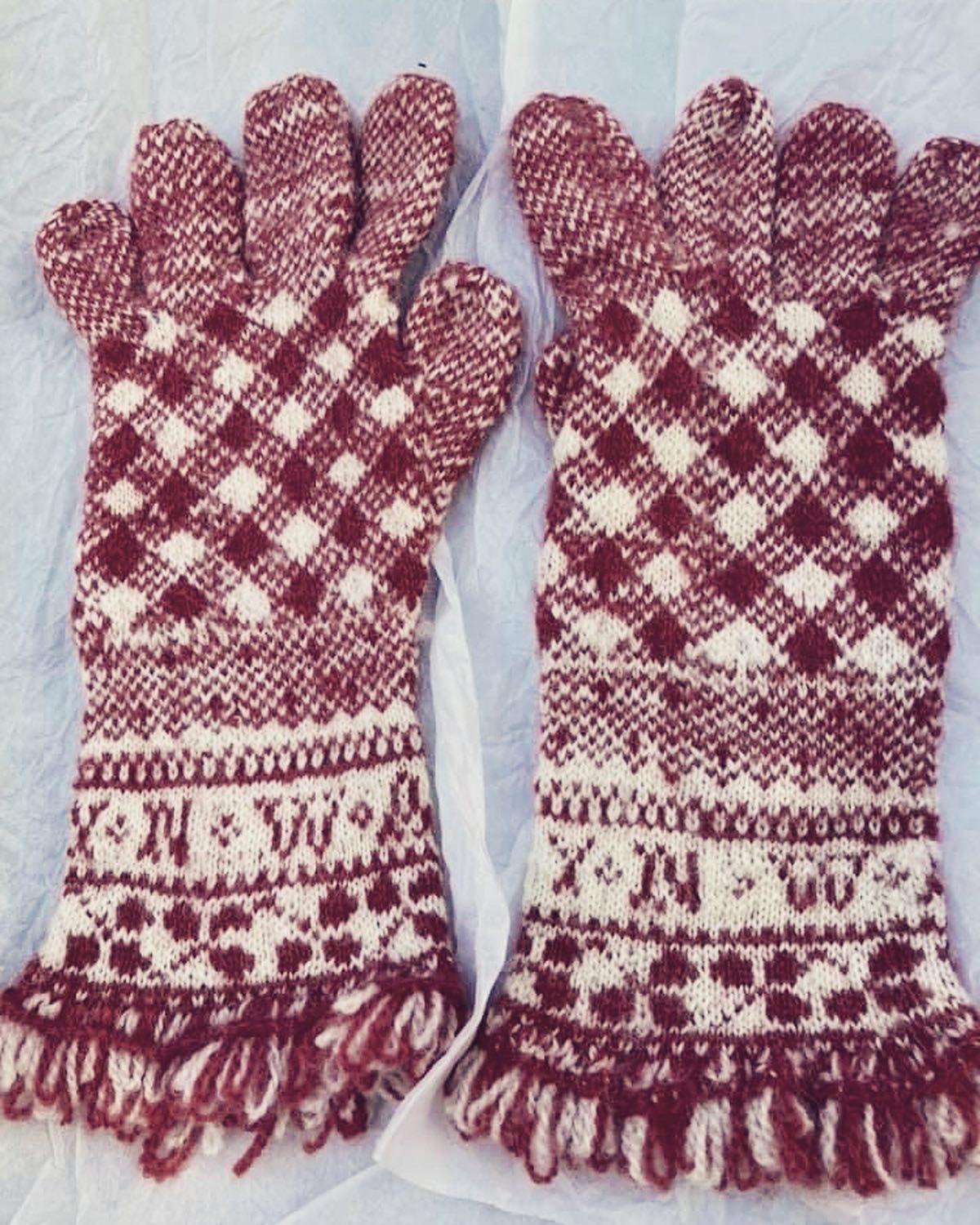
I also found the seemingly less well-known tradition from the Yorkshire Dales of “Dales Gloves”, preserved in a small museum collection, which looks similar. Love these gloves:
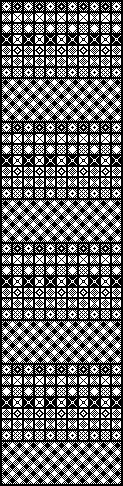
I thought I’d have a go at knitting some Sanquhar patterns. In general, as a free/open source software person, I find it hard to find good, free-to-download textile patterns, but made this pixel art pattern based on what I could find online:
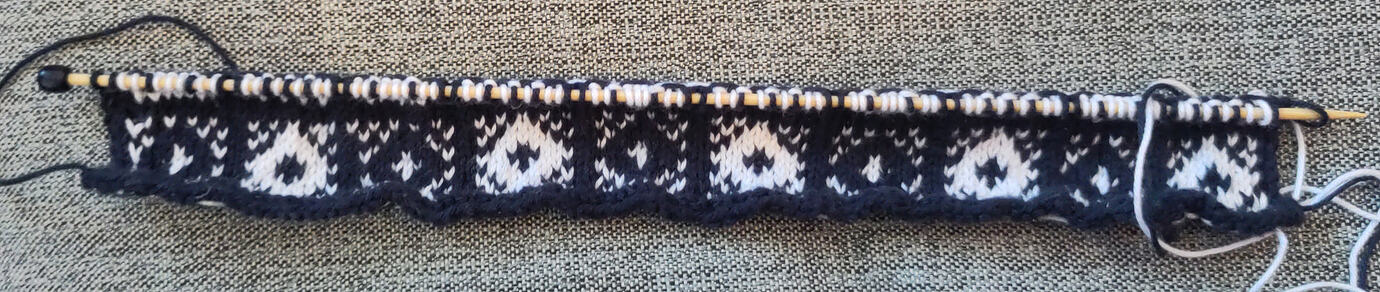
I do have a nice AYAB-hacked knitting machine and was tempted to go straight to that, but wanted to try hand-knitting the patterns first – as Sanquhar is a firmly hand-knitting tradition. I made a start yesterday, choosing to embrace error as you might spot..:
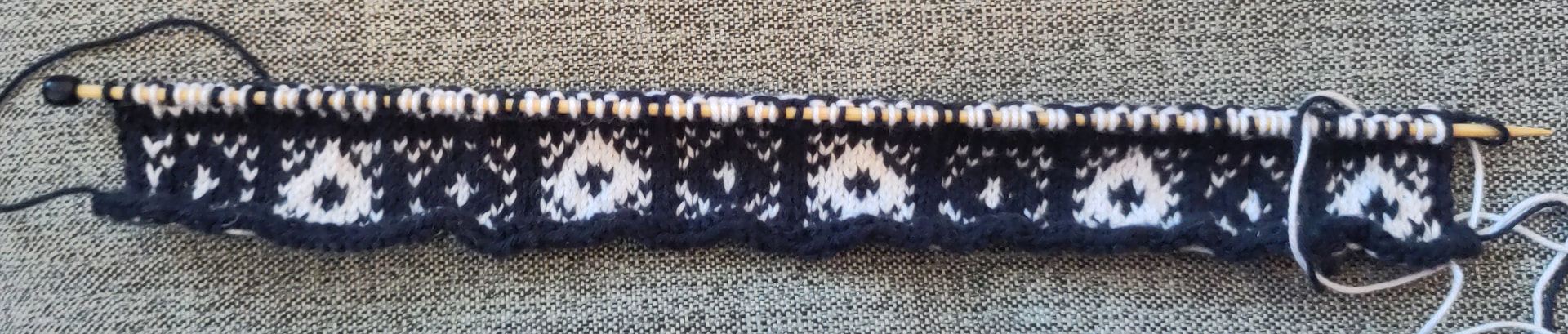
It’s pretty slow going ! But I did enjoy working out little tricks to help orient myself and memorise the pattern based on the previous row. The result isn’t super satisfying, I think these 3mm knitting needles are just too big, and the wool is probably too thick as well. I’m also struggling a lot with the purls, they’re fiddly and it’s harder to orient when you can’t see the front side of the work. I realise now I should have used with circular needles so I could just do knits.
The two-colour technique is called stranded colourwork (check out Felicity Ford’s incredible stranded colourwork sourcebook for her inspired take on this technique, featuring patterns sampled from e.g. the brickwork of Reading, and a handheld sound recorder..). I am working a colour with each hand, a combination of ‘continental’ and ‘english’-style knitting. It was interesting to find a post on the Dales knitting method by Ann Kingstone though, where she’d looked carefully at the back side of Dales knitting from Mary Allen, a member of the “Terrible Knitters of Dent” in the late 19th/early 20th century. Kingstone’s argument is that the wealthy gentry doing knitting as a hobby might hold a yarn in each hand, but the fiddling about this involves would be too slow for someone knitting for a living like Allen. Anyway, Ann Kingstone shares a video of the method for knitting rib (alternating between knits and purl stitches) that she thinks Allen would have used:
Knitting the cuff of a traditional Yorkshire Dales glove
It is fascinating that an experienced knitter can ‘read’ the back of a piece of knitting, and work out the movements that were used to create it, something @nebogeo has talked about around tablet weaving.
It’s also nice that you can see how knitting has seemingly travelled between the Yorkshire Dales in northern England and Sanquhar in the south west of Scotland. Knitting came relatively late to the UK, and the similarities with older Scandinavian traditions suggests the origins of this style. To me though, these patterns look more like weaving patterns than knitting patterns. This might be partly down to the constraints of fair isle - the avoidance of long ‘floats’ on the back of the work gives a certain aesthetic to the patterns, but perhaps the late arrival of knitting meant that weaving structures could have been appropriated as knitting patterns? This is very uneducated musing but I think I will try to weave some sanquhar patterns to see what happens. What I’ve already knitted looks a lot like ‘waffle’ weaving structures for example.
